Commercial & Specialty Turf
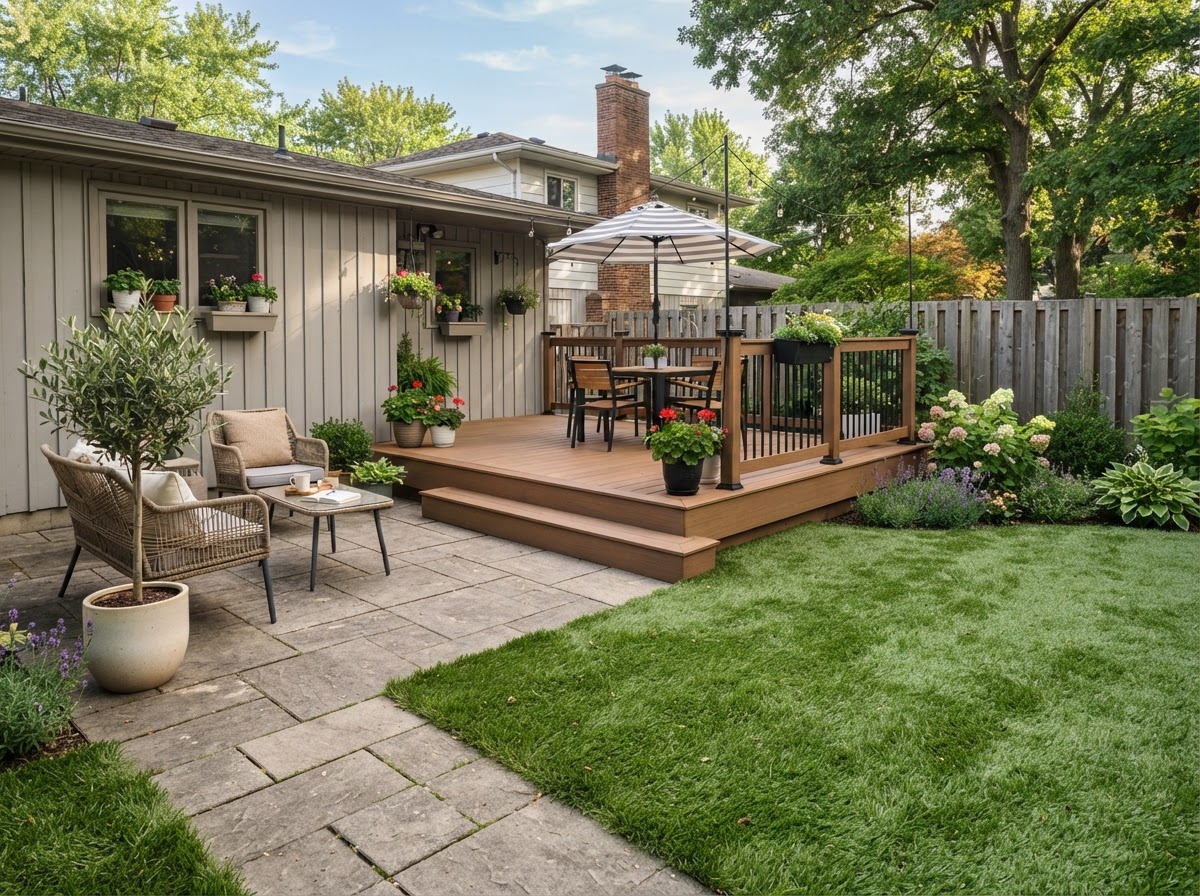
Deck & Patio Artificial Turf in Valley Stream, NY
Valley Stream Artificial Grass installs a finished turf surface over or adjacent to existing hardscape, sized around area, substrate condition, transitions, drainage and cuts for a clean integration with decks and patios.
A finished turf surface that transitions cleanly to existing decks and patios — planned around the substrate, not laid over an unsuitable surface.
Request a Turf Estimate
Tell us about your project. We'll follow up to schedule a site-specific evaluation.
Who Should Call
A finished turf surface over or adjacent to an existing deck, patio or hardscape.
The Outcome
A clean, integrated surface that connects smoothly to existing decks and patios and is easy to keep clean.
Best For
Owners adding turf over or next to an existing deck or patio.
What Deck & Patio Turf Covers
Deck and patio turf covers a finished turf surface installed over or adjacent to existing hardscape — a deck, patio, balcony or terrace. The system depends on the substrate condition, transitions between surfaces, drainage and the cuts required to fit the space.
A deck or patio installation is specified differently from a ground-level lawn. The surface sits on or next to an existing hardscape, so the base, drainage and edge details all have to respect that substrate rather than assuming a prepared ground base.
The existing surface must be suitable before turf goes down. Direct installation is not appropriate over every substrate — a damaged, uneven or poorly draining surface has to be corrected or prepared before a turf system can perform.
Who Needs Deck or Patio Turf
Owners who want a finished turf surface over or next to an existing deck or patio are the primary audience. A hard deck or patio that is uncomfortable underfoot, a hardscape that drains poorly, or a desire to soften an outdoor living space with a greener surface are common triggers.
Deck and patio turf can turn a hard, hot or drab hardscape into a more comfortable, usable outdoor living space, without the excavation and base work a ground-level lawn requires. It is often part of a larger outdoor living plan alongside furniture, planters and shade.
The service fits both residential and light commercial settings — a home patio, a restaurant terrace, a balcony or a deck around a pool. The system is specified for the substrate and the use, not as a one-size surface.
Substrate Condition
The existing substrate — the deck, patio or hardscape the turf goes over — is the foundation of the system. Its condition, slope and drainage all shape what preparation is required before the turf goes down.
A sound, sloped substrate that drains correctly may need minimal preparation. A substrate with cracks, unevenness, poor slope or drainage problems needs correction first, because a turf surface installed over a failing substrate will reflect those problems.
Direct installation is not appropriate over every substrate. A surface that holds water, moves, or is structurally unsound is not suitable without correction, and the estimate identifies what preparation is required before the turf goes down.
Transitions and Thresholds
Transitions between the turf and the existing surface — door thresholds, step edges, joints between materials — are planned so the surfaces meet cleanly and safely. A transition that lifts, gaps or creates a trip edge is a failure of the detail work, not the turf.
Door and threshold transitions are especially important on a deck or patio, because the turf meets the building at those points. The transition is planned so doors open cleanly over the surface and the edge does not create a trip or water-trapping gap.
Where the turf meets a different material — pavers, wood, stone — the edge is finished to match the existing surface height and style, so the transition looks intentional and holds up to foot traffic.
Drainage Over or Next to Hardscape
Drainage over or next to a hardscape is planned so water moves off the surface and away from the building, not pooling on or beneath the turf. The existing slope, the substrate and the surrounding grade all influence the drainage design.
A deck or patio that holds water beneath the turf develops odor, wear and substrate problems, which is why drainage is planned alongside the installation rather than assumed. The drainage path respects the existing hardscape's slope and outlets.
Where the turf meets a building, drainage is especially important to keep water moving away from the structure. A poorly planned edge can trap water against the building, which is why edge and drainage planning go together.
Cuts, Edges and Cleanability
Complex shapes and edge transitions on a deck or patio add cutting and detail work. Tight cuts around railings, posts, planters and corners are important for a finished look, and the edges are secured so they do not lift under foot traffic.
Cleanability is a practical consideration on a deck or patio, because the surface collects debris from surrounding hardscape and overhead trees. The system is selected so it can be cleaned — brushed, rinsed, groomed — without trapping debris or water.
Maintenance is a separate service scoped based on the area and condition. A deck or patio surface under trees or near heavy foot traffic may need more frequent cleaning and grooming than a sheltered, low-use surface.
What Affects Deck & Patio Cost
For planning purposes, professionally installed artificial turf in the New York market often falls broadly around $6–$22 per square foot, while Long Island projects are frequently quoted toward roughly $12–$22 per square foot. These are market planning ranges, not a fixed Valley Stream Artificial Grass quote.
Substrate condition, transitions and drainage shape the estimate. A sound substrate that needs minimal preparation is at the lower end; a substrate that needs correction or a complex layout with many transitions is at the higher end.
Complex shapes and edge transitions add cutting and detail work, and the area relative to the perimeter length matters — a small patio with many corners and edges has more detail work per square foot than a large, simple rectangle.
The estimate reflects the actual substrate, layout and transitions, not a square-footage number alone. A deck or patio estimate that does not account for substrate condition is a warning sign that the preparation may be inadequate.
What Happens After I Request an Estimate?
After you request an estimate, we evaluate the existing substrate, the transitions and the drainage, then recommend a system and scope — including any preparation required before the turf goes down. There is no obligation until you decide to move forward.
The estimate reflects the actual deck or patio — the substrate, layout, transitions and drainage — rather than a one-size square-footage number. A firm timeline and price are set after the surface is evaluated.
What Drives the Price
Published ranges are market planning references only, not a fixed Valley Stream Artificial Grass quote. The factors below shape your site-specific estimate:
- Area size / square footage
- Turf product selection
- Existing material removal
- Excavation depth
- Base preparation and compaction
- Grade and slope
- Drainage design
- Site access
- Curves, cuts and shape complexity
- Edging and perimeter detail
- Infill type and quantity
- Hardscape interfaces
- Substrate condition and preparation
- Transitions and thresholds
- Layout complexity and cuts
- Cleanability requirements
What to Ask Before Hiring
- Is my existing deck or patio substrate suitable for turf, or does it need correction?
- How are door and threshold transitions handled?
- How is drainage planned over or next to the hardscape?
- How are edges and cuts finished for a clean look?
- What preparation is required before the turf goes down?
- How is the surface cleaned and maintained?
Deck & Patio Artificial Turf in Valley Stream
Valley Stream's mix of residential and commercial properties within approximately 3.48 square miles means commercial turf projects often sit close to active foot traffic and existing infrastructure. A business-front or common-area installation has to be planned around how customers, tenants and deliveries move across the surface every day, not just how it looks when it goes in.
Long Island weather brings rain, snow and freeze/thaw cycles, so drainage and a stable base are especially important for high-traffic commercial surfaces. A commercial system that holds water or develops a soft base becomes a liability during the colder months, when foot traffic and freeze cycles compound any weakness in the base or drainage path.
Valley Stream maintains its own Village Building Department for local permitting and zoning questions when a commercial project changes grading, drainage or regulated features. Commercial property owners should confirm requirements before work begins, because commercial scope often involves more regulated site work than a residential lawn.
On compact Long Island commercial sites, access logistics — how materials reach the surface, where equipment can stage, and whether the business can keep operating during installation — are common planning points that shape both cost and feasibility. Phasing is often required so a business does not have to close while the work proceeds.
Want a Number for Your Project?
Market ranges only go so far. Request a site-specific estimate or call to discuss scope.
How the Project Works
- 1
Request an estimate
- 2
Discuss intended use and site conditions
- 3
Evaluate dimensions, access, drainage and preparation
- 4
Review recommended turf system and scope
- 5
Schedule professional installation
- 6
Final walkthrough
Ready to Move Forward?
Call now or request an estimate to start the conversation about your property.
Why Work With Valley Stream Artificial Grass
10 Years of Experience
A decade of turf-focused installation, repair and maintenance work.
Insured
Insured for the work we perform on your property.
Approximately 30-Mile Service Area
Serving Valley Stream and selected Long Island communities within roughly 30 miles.
Site-Specific Estimates
Estimates reflect your actual property, grade, access and drainage — not a one-size number.
Turf-Focused Service Menu
Residential, pet, golf, sports, commercial, specialty, repair and maintenance.
Residential & Commercial
Experience across homes, businesses, schools, rooftops and specialty installations.
Deck & Patio Artificial Turf — Frequently Asked Questions
Can turf go over my existing deck or patio?
It depends on the substrate condition, transitions and drainage. The existing surface must be suitable before turf goes down — a damaged, uneven or poorly draining surface needs correction first. Direct installation is not appropriate over every substrate.
How much does deck or patio turf cost?
For planning purposes, professionally installed artificial turf in the New York market often falls broadly around $6–$22 per square foot, while Long Island projects are frequently quoted toward roughly $12–$22 per square foot. These are market planning ranges, not a fixed Valley Stream Artificial Grass quote. Substrate condition, transitions and drainage shape the estimate. A sound substrate is at the lower end; a substrate needing correction or a complex layout is at the higher end.
How is drainage handled over a hardscape?
Drainage is planned so water moves off the surface and away from the building, not pooling on or beneath the turf. The existing slope, substrate and surrounding grade all influence the design.
How are door and threshold transitions handled?
Transitions are planned so doors open cleanly over the surface and the edge does not create a trip or water-trapping gap. Where the turf meets a different material, the edge is finished to match the existing surface height and style.
Is deck or patio turf different from ground-level turf?
Yes. The surface sits on or next to an existing hardscape, so the base, drainage and edge details respect the substrate rather than assuming a prepared ground base. The system is specified for the substrate and the use.
What maintenance does a deck or patio surface need?
Periodic cleaning, grooming and debris removal. A surface under trees or near heavy foot traffic may need more frequent cleaning than a sheltered, low-use surface. Maintenance is scoped based on the area and condition.
What if my substrate is damaged or uneven?
It needs correction before the turf goes down. A turf surface installed over a failing substrate will reflect those problems, so the estimate identifies what preparation is required.
Request Your Artificial Turf Estimate
Tell us about your property and what you're hoping to solve. We'll follow up to schedule a site-specific evaluation.
Prefer to talk now?
516-963-5452Request a Turf Estimate
Tell us about your property. We'll follow up to schedule a site-specific evaluation.
Serving Valley Stream & Long Island
Valley Stream Artificial Grass serves residential and commercial turf projects in Valley Stream and selected communities within approximately 30 miles.
Targeted Communities
Other properties within the approximately 30-mile radius may be considered based on project location.
View all service areas →