Residential Turf
Artificial Grass Installation in Valley Stream, NY
Valley Stream Artificial Grass provides complete artificial grass installation — site evaluation, base preparation, drainage, turf layout, seams, edging, infill and a final walkthrough — for homeowners replacing natural lawns with a permanent synthetic surface.
A site-specific turf system built on a properly prepared, well-drained base rather than turf laid over unprepared ground.
Request a Turf Estimate
Tell us about your project. We'll follow up to schedule a site-specific evaluation.
Who Should Call
A homeowner wants a complete synthetic lawn installation to replace natural grass that is costly, muddy or hard to maintain.
The Outcome
A consistently usable, low-maintenance lawn without the mowing, watering and mud cycle of natural grass.
Best For
Owners ready to replace natural grass with a permanent, professionally installed turf system.
What Professional Installation Includes
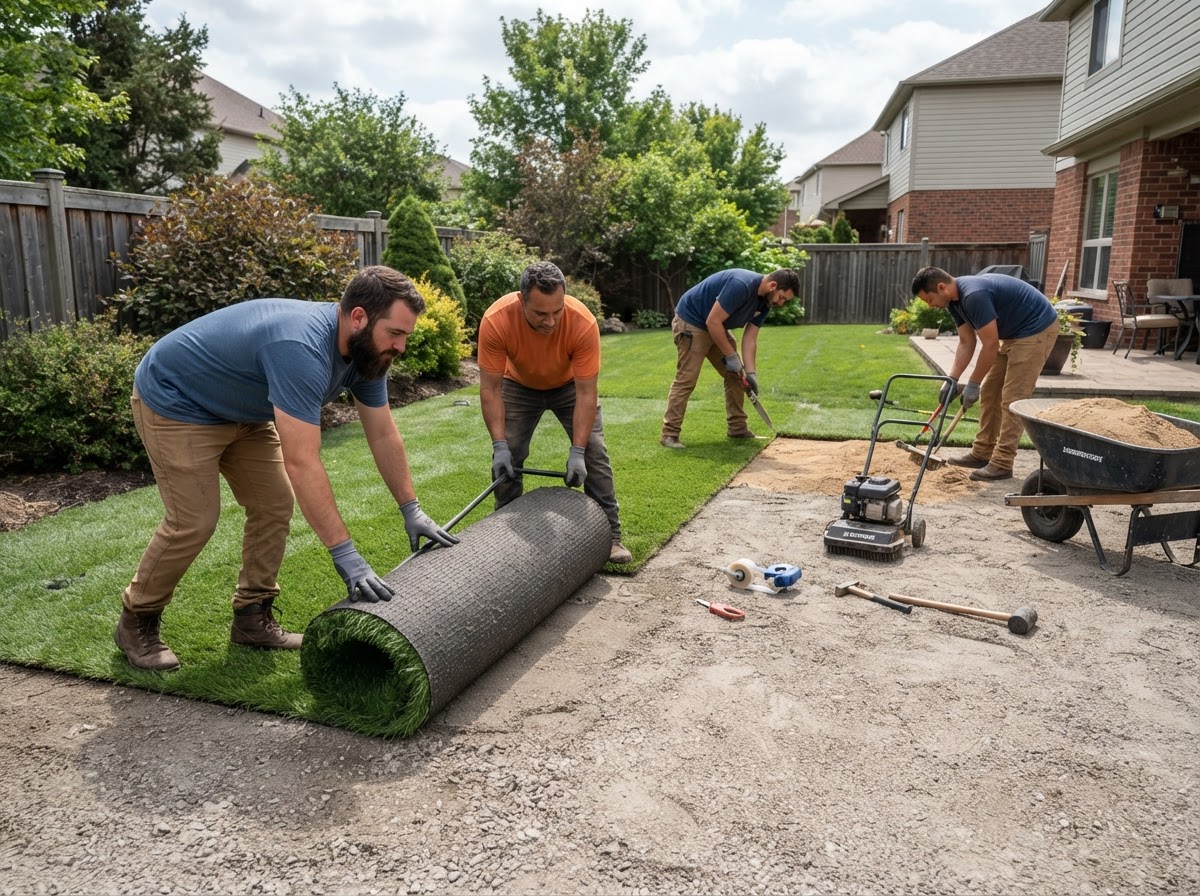
Professional artificial grass installation covers site evaluation, measuring and layout, removal and excavation as required, grading, base preparation and compaction, drainage planning, turf layout and cutting, seam work, perimeter securing, appropriate infill when applicable, grooming and cleanup, and a final walkthrough. Each step depends on your specific property — the grade, soil, access and how the yard is used.
The base is the foundation of the entire system. A properly compacted aggregate base keeps the surface flat, supports drainage and prevents the settling and shifting that cause wrinkles and lifted edges later. Turf laid directly over unprepared ground or existing grass is a common cause of premature failure.
Drainage planning runs alongside the base work, not after it. The goal is a controlled path that moves surface water away from the turf and any surrounding structures, walkways or foundations. Existing grade, soil type, downspout discharge and nearby hardscape all influence how that path is designed.
How Much Artificial Grass Installation Costs
For planning purposes, professionally installed artificial turf in the New York market often falls broadly around $6–$22 per square foot, while Long Island projects are frequently quoted toward roughly $12–$22 per square foot. These are market planning ranges, not a fixed Valley Stream Artificial Grass quote.
The final estimate depends on turf selection, excavation, base preparation, drainage, site access, square footage, cuts, edging and infill. Steep grades, difficult access, complicated curves, pavers, pool edges, additional drainage and removal of existing materials can raise cost.
Two properties of the same square footage can have very different estimates because of what is underneath and how the site is accessed. A flat, open yard with easy access and no removal work is at the lower end of the planning range; a sloped yard with side-yard-only access, existing hardscape to tie into and poor existing drainage is at the higher end.
How Long Installation Takes
Many straightforward residential turf installations can be completed in a few working days, while larger, access-limited or highly customized projects can take longer. Site preparation is often the major variable, so a firm timeline is set after the property is evaluated.
The timeline breaks down roughly into preparation and installation. Excavation, grading, base installation and compaction often take the largest share of the time. Once the base is set and approved, turf layout, cutting, seaming, infill and grooming move more quickly. Weather and access can affect scheduling on Long Island, particularly during the wetter and colder months.
Does the Yard Need Excavation and a Base?
Yes, in most cases. A stable, compacted base is the foundation of a turf system that stays flat and drains properly. Excavation depth depends on the existing surface, soil and grade. Turf laid over unprepared ground is a common cause of later failure.
The existing surface — natural grass, soil, old mulch, or a previous failed installation — is removed to the required depth, the subgrade is shaped and compacted, and a compacted aggregate base is installed and graded to the planned drainage path. Only after the base is set and approved does the turf go down.
How Does Drainage Work?
Drainage and a stable base are critical parts of a professional artificial turf system because water still needs a controlled path away from the surface and surrounding structures. Existing grade, soil, nearby hardscape, pools, pet use and low areas all influence drainage design.
Turf will not solve flooding. It is designed to manage surface water through a planned base and drainage path. If a property has a broader stormwater or grading problem, that needs to be addressed as part of the project scope or by the appropriate professional — a turf system alone does not correct regional drainage issues.
Choosing a Turf Product for Your Use
Turf products vary in fiber type — polyethylene, polypropylene or nylon at a high level — as well as pile height, density, backing and drainage design. The right product depends on how the yard is used: a showpiece front lawn, a high-traffic backyard, a pet area or a practice surface all call for different characteristics.
Infill, where the system uses it, affects how the fibers stand, how the surface feels underfoot and how the system performs for a given use. Product selection is matched to your intended use during the estimate, not chosen generically. No specific manufacturer or product is claimed until verified.
Common Mistakes to Avoid
The most common mistakes are skipping or under-specifying the base, ignoring the existing drainage path, choosing a product by price alone without matching it to the use, and securing edges inadequately so they lift over time. Each of these shows up later as wrinkles, standing water, matting or separating seams.
A site-specific estimate that evaluates grade, access, drainage and intended use is the best way to avoid these issues. A square-footage-only quote that does not account for what is underneath the surface is a warning sign that the base and drainage planning may be inadequate.
What Happens After I Request an Estimate?
After you request an estimate, we follow up to discuss your intended use and site conditions, then evaluate dimensions, access, drainage and preparation before recommending a turf system and scope. There is no obligation until you decide to move forward, and a firm timeline and price are set after the property is evaluated.
The estimate reflects your actual property — the grade, soil, access, existing materials and how the yard is used — rather than a one-size square-footage number. Once you approve the recommended scope, the project is scheduled and the preparation and installation proceed in sequence with a final walkthrough.
What Drives the Price
Published ranges are market planning references only, not a fixed Valley Stream Artificial Grass quote. The factors below shape your site-specific estimate:
- Area size / square footage
- Turf product selection
- Existing material removal
- Excavation depth
- Base preparation and compaction
- Grade and slope
- Drainage design
- Site access
- Curves, cuts and shape complexity
- Edging and perimeter detail
- Infill type and quantity
- Hardscape interfaces
What to Ask Before Hiring
- How is the base prepared and compacted for my specific grade and soil?
- How is drainage planned so water has a controlled path away from the surface and surrounding structures?
- What turf product is recommended and why, for how my yard is actually used?
- How are seams and edges secured to prevent lifting over time?
- What infill is appropriate for my use, and how is it applied and groomed?
- What does the final walkthrough cover, and what should I look for before approving?
Artificial Grass Installation in Valley Stream
Valley Stream is a compact village of approximately 3.48 square miles with roughly 40,000 residents and an owner-occupancy rate near 78.7%, meaning most properties are maintained directly by the owners who use them. That makes a low-maintenance synthetic surface a practical fit for owners planning to stay and who are tired of the recurring cost and effort of natural lawn care on a Long Island property.
Long Island weather brings freeze/thaw cycles, rain and snow, so drainage and a stable base are especially important here. A turf system that is not properly drained or that sits on an unprepared base can shift, settle or develop standing water over the winter. Valley Stream maintains its own Village Building Department for local permitting and zoning questions when a project changes grading, drainage or regulated features.
Valley Stream's mix of older established homes, compact lots and mature landscaping means access, edge transitions and integration with existing walkways, driveways and planting beds are common planning points on residential turf projects here. Recognized village public spaces like Village Green Park and Mill Pond, and nearby North Woodmere Park in the broader service area, reflect the outdoor-lifestyle character of the community.
Want a Number for Your Project?
Market ranges only go so far. Request a site-specific estimate or call to discuss scope.
How the Project Works
- 1
Request an estimate
- 2
Discuss intended use and site conditions
- 3
Evaluate dimensions, access, drainage and preparation
- 4
Review recommended turf system and scope
- 5
Schedule professional installation
- 6
Final walkthrough
Ready to Move Forward?
Call now or request an estimate to start the conversation about your property.
Why Work With Valley Stream Artificial Grass
10 Years of Experience
A decade of turf-focused installation, repair and maintenance work.
Insured
Insured for the work we perform on your property.
Approximately 30-Mile Service Area
Serving Valley Stream and selected Long Island communities within roughly 30 miles.
Site-Specific Estimates
Estimates reflect your actual property, grade, access and drainage — not a one-size number.
Turf-Focused Service Menu
Residential, pet, golf, sports, commercial, specialty, repair and maintenance.
Residential & Commercial
Experience across homes, businesses, schools, rooftops and specialty installations.
Artificial Grass Installation — Frequently Asked Questions
How much does artificial grass installation cost?
For planning purposes, professionally installed artificial turf in the New York market often falls broadly around $6–$22 per square foot, while Long Island projects are frequently quoted toward roughly $12–$22 per square foot. These are market planning ranges, not a fixed Valley Stream Artificial Grass quote. The final estimate depends on turf selection, base preparation, drainage, access and square footage.
How long does installation take?
Many straightforward residential installations take a few working days; larger or access-limited projects can take longer. Site preparation is often the major variable.
Does artificial turf need drainage?
Yes. Drainage and a stable base are critical so water has a controlled path away from the surface and surrounding structures.
Do I need a permit?
Permit and property requirements vary by municipality and scope. Confirm with the local building or zoning authority before work begins when the project changes grading, drainage or regulated features.
Can artificial turf be installed over my existing lawn?
In most cases the existing surface is removed and a compacted base is installed first. Turf laid directly over unprepared ground or existing grass is a common cause of premature failure.
What is the difference between turf products?
Turf varies in fiber type, pile height, density, backing and drainage design. The right product is matched to how the yard is used — a front lawn, a high-traffic backyard, a pet area or a practice surface all call for different characteristics.
Will artificial turf solve my yard's drainage problems?
No. Turf manages surface water through a planned base and drainage path, but it does not solve broader flooding or regional drainage issues. Those need to be addressed as part of the project scope or by the appropriate professional.
Request Your Artificial Turf Estimate
Tell us about your property and what you're hoping to solve. We'll follow up to schedule a site-specific evaluation.
Prefer to talk now?
516-963-5452Request a Turf Estimate
Tell us about your property. We'll follow up to schedule a site-specific evaluation.
Serving Valley Stream & Long Island
Valley Stream Artificial Grass serves residential and commercial turf projects in Valley Stream and selected communities within approximately 30 miles.
Targeted Communities
Other properties within the approximately 30-mile radius may be considered based on project location.
View all service areas →