Turf Repair & Maintenance
Artificial Turf Maintenance & Grooming in Valley Stream, NY
Valley Stream Artificial Grass provides turf maintenance and grooming to address matting, redistribute infill, clear debris and restore the appearance and performance of an existing turf system.
Professional maintenance that extends the life and look of a sound turf system — not a repair for something that has failed.
Request a Turf Estimate
Tell us about your project. We'll follow up to schedule a site-specific evaluation.
Who Should Call
Matting, infill redistribution, debris accumulation or appearance and performance decline on existing turf.
The Outcome
A refreshed, groomed surface with redistributed infill, cleared debris and restored appearance.
Best For
Owners of sound turf that has matted or accumulated debris.
What Turf Maintenance Includes
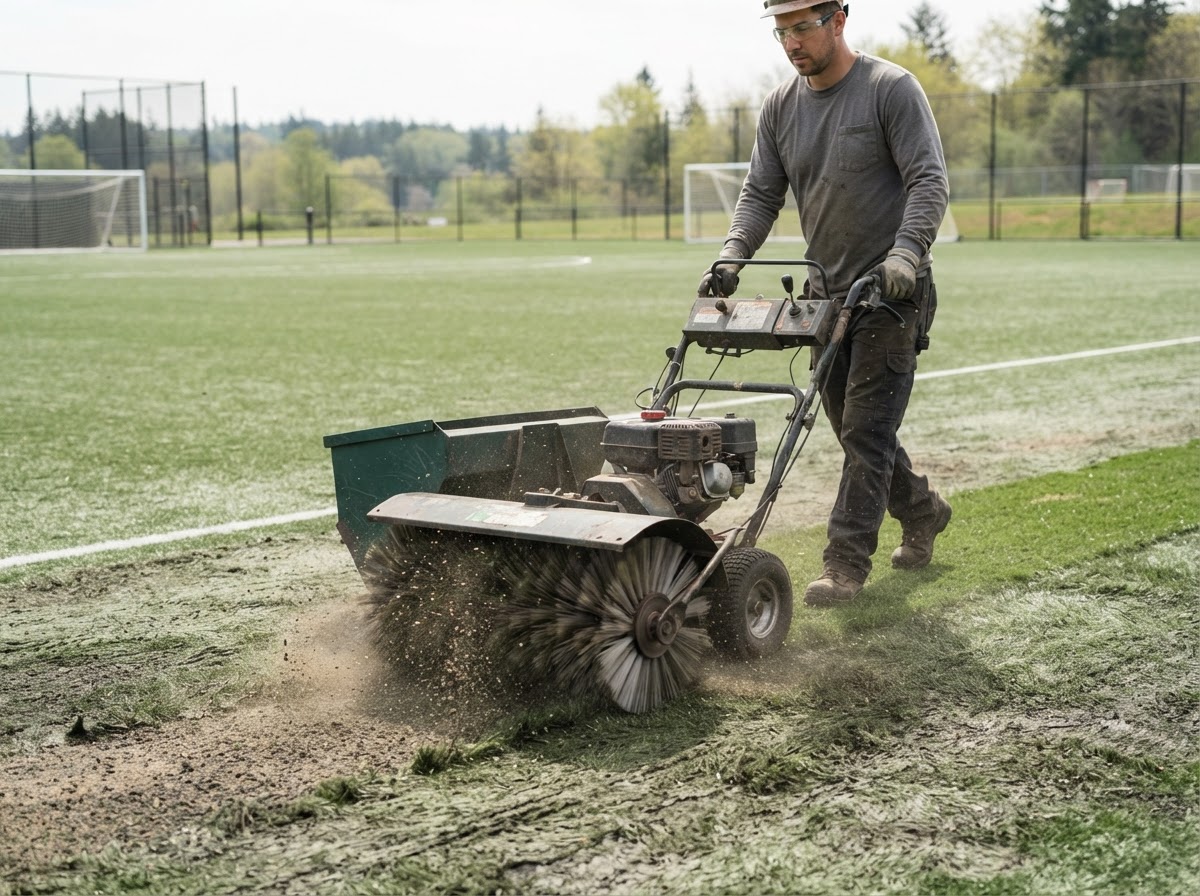
Professional turf maintenance includes grooming to lift and restore matted fibers, redistributing infill that has shifted in high-use areas, removing debris that has accumulated on the surface, and inspecting seams and edges for early signs of issues.
Grooming uses professional equipment to brush the turf fibers upright, which restores the appearance and helps the surface perform as intended. Over time, foot traffic, weather and use mat the fibers flat, and grooming reverses that matting to keep the surface looking and functioning like new.
Infill redistribution is a key part of maintenance on systems that use infill. High-use areas — paths, pet zones, play areas — lose infill as traffic shifts it, and redistributing the infill restores the surface's cushioning, drainage and fiber support in those zones.
Maintenance vs Repair
Maintenance — grooming, infill redistribution and debris removal — restores appearance and performance of a sound system. Repair fixes something that has failed. The two are different services for different conditions, and choosing the right one depends on the condition of the turf.
Maintenance is appropriate for sound turf that has matted, accumulated debris, or needs infill redistributed in high-use areas. If the turf is failing — lifting edges, separating seams, standing water, base problems — repair or replacement is the right service, and grooming alone will not fix those issues.
An inspection can help determine which service is appropriate. If the turf is sound but tired, maintenance restores it. If the turf has actual failures, maintenance alone will not address the cause, and repair is needed first.
Signs Your Turf Needs Maintenance
Signs that maintenance is appropriate include matting — fibers that have flattened and no longer stand upright — especially in high-traffic areas. The surface may look worn or tired even though the turf itself is structurally sound.
Infill redistribution is needed when high-use areas have lost infill — the surface may feel firmer or less cushioned in those zones, or the infill may have accumulated in low-traffic areas where it is not needed.
Debris accumulation — leaves, twigs, dirt and other material that has settled into the turf — is another sign. While light debris can be removed by the owner, a professional maintenance visit clears deeper accumulation and grooms the surface in the same visit.
How Much Does Turf Maintenance Cost?
National market planning references place routine turf maintenance around roughly $0.25–$0.35 per square foot where providers use area-based maintenance pricing. Actual cost depends on area and condition, and is scope-based. These are planning references, not a fixed Valley Stream Artificial Grass quote.
Actual cost depends on the area size, the condition of the turf and the level of service required. A small residential lawn in good condition is at the lower end; a large commercial surface or a pet area with heavy debris and infill loss is at the higher end.
Maintenance is often priced as a service visit rather than strictly by square footage, because the condition of the turf and the level of grooming required affect the time and effort. The estimate reflects the actual area, condition and service level.
How Often Should Turf Be Groomed?
It depends on use. High-traffic and pet areas benefit from more frequent grooming — potentially several times a year — because the wear is concentrated and continuous. A typical residential lawn that sees moderate use may need grooming once or twice a year.
Commercial surfaces with daily foot traffic may need more frequent maintenance than residential lawns, because the fibers mat faster under continuous use. A maintenance schedule can be recommended based on the actual use level and condition of the surface.
Seasonal considerations matter on Long Island. Grooming after the fall leaf drop and before winter can prepare the surface for the colder months, and a spring grooming can restore the surface after winter weather. These seasonal touchpoints are a practical maintenance rhythm for many properties.
What Professional Grooming Restores
Professional grooming restores the appearance of the turf by lifting matted fibers upright, which makes the surface look fuller and more consistent. It also restores performance — upright fibers drain better, support infill more effectively, and provide a more consistent surface for use.
Infill redistribution restores the cushioning and drainage performance of high-use areas that have lost infill. Without redistribution, those zones become firmer, less cushioned and more prone to fiber damage, because the infill that supports the fibers has shifted away.
Debris removal prevents organic material from breaking down into the turf and potentially affecting drainage or creating an environment for weeds or odor. A professional maintenance visit clears debris more thoroughly than surface-level raking, especially in dense turf.
Can I Maintain My Turf Myself?
Light maintenance — removing leaves and surface debris, rinsing pet areas — can be done by the owner. However, professional grooming uses equipment that most owners do not have, and the grooming technique matters: brushing too aggressively or in the wrong direction can damage the fibers rather than restore them.
Infill redistribution is difficult to do properly without professional equipment, because the infill needs to be brushed evenly across the surface to the right depth. Over- or under-filling affects how the surface performs and how the fibers stand.
A professional maintenance visit also includes an inspection of seams and edges, which can catch early signs of issues before they become repairs. This inspection value is part of why professional maintenance is more than just brushing the surface.
What Happens After I Request Maintenance?
After you request maintenance service, we discuss the area, the condition and the use level, then schedule a grooming visit. The visit includes grooming, infill redistribution where needed, debris removal and an inspection of seams and edges.
If the inspection reveals issues that go beyond maintenance — lifting edges, separating seams, drainage problems — those are flagged for separate repair service. Maintenance addresses the appearance and performance of a sound system; it does not repair failures.
What Drives the Price
Published ranges are market planning references only, not a fixed Valley Stream Artificial Grass quote. The factors below shape your site-specific estimate:
- Area size
- Condition of the turf
- Infill redistribution needed
- Debris level
- Use level and traffic
What to Ask Before Hiring
- Is my turf sound, or does it need repair instead of maintenance?
- How often should my high-use or pet areas be groomed?
- What does grooming restore — appearance, infill, or both?
- What debris and infill issues are present on my surface?
- Does the maintenance visit include an inspection of seams and edges?
- What equipment is used, and can it damage the fibers if done wrong?
Turf Maintenance & Grooming in Valley Stream
Valley Stream's owner-occupied properties — roughly 78.7% owner occupancy — mean many owners notice turf issues early and want them diagnosed before they spread. Long Island weather brings rain, snow and freeze/thaw cycles that can stress seams, edges and drainage paths over time, making early inspection valuable on properties that see all four seasons.
Valley Stream maintains its own Village Building Department for local permitting and zoning questions when a repair project changes grading, drainage or regulated features. A repair that involves correcting drainage or re-grading may require confirmation with the local authority before work begins.
On compact Long Island lots, a small turf problem can affect a disproportionate share of the usable yard, which is why early diagnosis matters. A lifted edge or separating seam on a small property is more visible and more disruptive than the same issue on a large estate, and it can limit use of the yard until it is corrected.
Want a Number for Your Project?
Market ranges only go so far. Request a site-specific estimate or call to discuss scope.
How the Project Works
- 1
Request maintenance service
- 2
Describe the area, condition and use level
- 3
Schedule grooming
- 4
Grooming, infill redistribution and debris removal
- 5
Inspection of seams and edges
- 6
Final walkthrough
Ready to Move Forward?
Call now or request an estimate to start the conversation about your property.
Why Work With Valley Stream Artificial Grass
10 Years of Experience
A decade of turf-focused installation, repair and maintenance work.
Insured
Insured for the work we perform on your property.
Approximately 30-Mile Service Area
Serving Valley Stream and selected Long Island communities within roughly 30 miles.
Site-Specific Estimates
Estimates reflect your actual property, grade, access and drainage — not a one-size number.
Turf-Focused Service Menu
Residential, pet, golf, sports, commercial, specialty, repair and maintenance.
Residential & Commercial
Experience across homes, businesses, schools, rooftops and specialty installations.
Turf Maintenance & Grooming — Frequently Asked Questions
How often should artificial turf be groomed?
It depends on use. High-traffic and pet areas benefit from more frequent grooming — potentially several times a year — while a typical residential lawn may need it once or twice a year. On Long Island, seasonal grooming after fall and before spring is a practical rhythm.
How much does turf maintenance cost?
National market planning references place routine turf maintenance around roughly $0.25–$0.35 per square foot where providers use area-based maintenance pricing. Actual cost depends on area and condition, and is scope-based. These are planning references, not a fixed Valley Stream Artificial Grass quote. Actual cost depends on area size, condition and the level of service required. A small lawn in good condition is at the lower end; a large commercial or pet surface with heavy debris is at the higher end.
What is the difference between maintenance and repair?
Maintenance restores appearance and performance of a sound system through grooming, infill redistribution and debris removal. Repair fixes something that has failed — lifting edges, separating seams, drainage problems. Maintenance alone does not fix failures.
Can I groom my turf myself?
Light debris removal and rinsing can be done by the owner, but professional grooming uses equipment and techniques most owners do not have. Brushing too aggressively or in the wrong direction can damage fibers, and infill redistribution is difficult to do evenly without professional equipment.
What does grooming restore?
Grooming lifts matted fibers upright to restore appearance and performance — upright fibers drain better, support infill more effectively and provide a more consistent surface. Infill redistribution restores cushioning and drainage in high-use areas that have lost infill.
Does maintenance include an inspection?
Yes. A professional maintenance visit includes an inspection of seams and edges to catch early signs of issues before they become repairs. This inspection value is part of why professional maintenance is more than just brushing the surface.
Should I schedule maintenance before winter?
On Long Island, grooming after the fall leaf drop and before winter can prepare the surface for colder months, and a spring grooming can restore it after winter weather. These seasonal touchpoints are a practical maintenance rhythm for many properties.
Request Your Artificial Turf Estimate
Tell us about your property and what you're hoping to solve. We'll follow up to schedule a site-specific evaluation.
Prefer to talk now?
516-963-5452Request a Turf Estimate
Tell us about your property. We'll follow up to schedule a site-specific evaluation.
Serving Valley Stream & Long Island
Valley Stream Artificial Grass serves residential and commercial turf projects in Valley Stream and selected communities within approximately 30 miles.
Targeted Communities
Other properties within the approximately 30-mile radius may be considered based on project location.
View all service areas →